
Everything engineers and buyers need to specify a UL 891 low-voltage switchboard — ratings, construction, comparisons and ordering.
UL 891 is the North American standard for low-voltage switchboards rated 1000 V AC and below. A UL 891 switchboard is a free-standing, dead-front assembly that receives bulk power and distributes it to downstream panelboards, motor control centers and equipment through a main device and a bank of group-mounted feeder breakers. “Dead-front” means no energized parts are exposed on the operating face, which makes routine switching and inspection far safer.
Evenson Power UL 891 switchboards are built and labeled to UL 891 with full NEC (NFPA 70) compliance, for service-entrance and main distribution in data centers, commercial buildings, hospitals, industry and crypto-mining facilities.
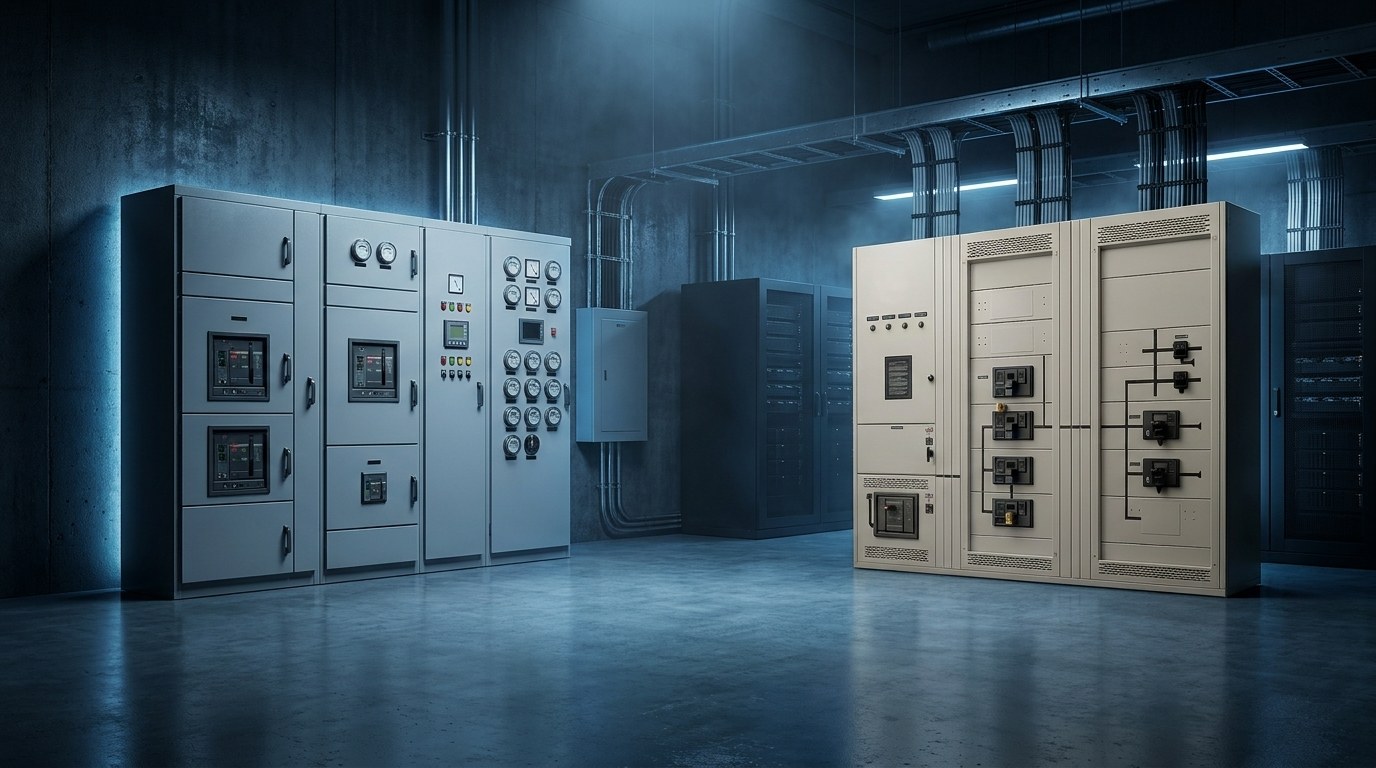
Rigid bolted steel construction, sectionalized for transport and site assembly, with generous code-mandated wire-bending space. NEMA 1 indoor and NEMA 3R outdoor enclosures, top/bottom/side incoming feed, and a fully dead-front operating face.
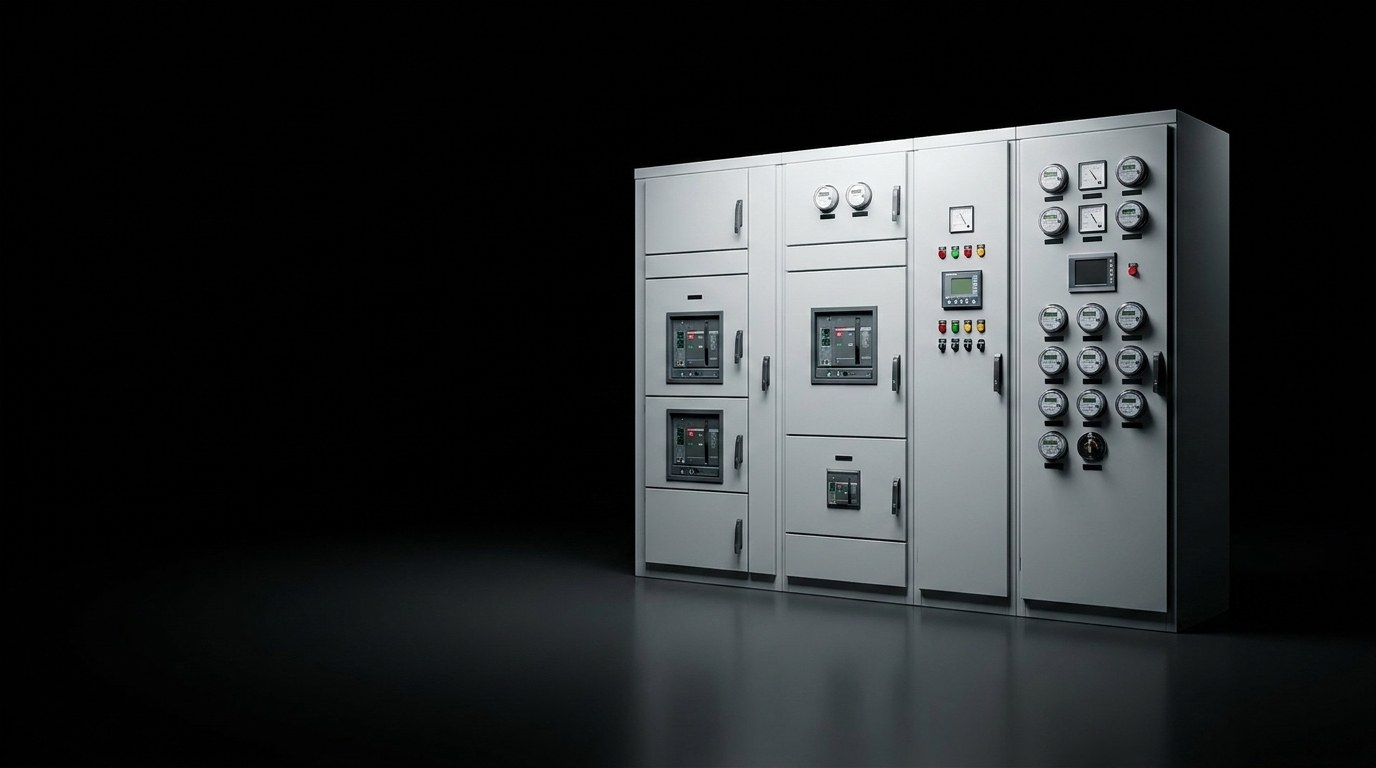
The bus is the heart of the board — sized for continuous current and braced to withstand the mechanical forces of a fault up to the full interrupting rating. The main device is typically a service-entrance-rated UL 1066 power circuit breaker, with group-mounted UL 489 molded-case breakers feeding individual loads.
UL 891 switchboards start at 800 A and are free-standing service-entrance or main-distribution boards. UL 67 panelboards are smaller, wall-mounted branch devices, typically up to 1200 A. UL 1558 switchgear uses compartmentalized draw-out breakers with a 30-cycle short-time rating and arc-flash containment, at significantly higher cost. For the great majority of commercial, institutional and data-center distribution, UL 891 — with group-mounted breakers and a 3-cycle rating — is the practical, cost-effective choice.
A broad menu of options tailors each board to the project: power metering, surge protective devices, ground-fault detection, current and voltage transformers, HMI displays, shunt-trip provisions, generator tie-ins and K-factor/harmonic mitigation for non-linear loads.
To order, send:
See the Evenson Power UL 891 switchboard page or request a quote and our team will return a submittal for approval.
The through-bus is the backbone of a switchboard, sized for continuous current and braced to survive the mechanical forces of a fault up to the full interrupting rating. Evenson Power uses high-conductivity copper (or optional aluminum) with plated joints that stay cool and stable over decades of loading. Correct bracing is a safety-critical detail: a board must hold together under the very fault current it is rated to interrupt, which is why bus design is matched to the kAIC rating you specify.
Every Evenson Power switchboard is verified before shipment — thermal performance under rated load, short-circuit withstand of the bus and bracing, dielectric integrity, and operational checks of every main and feeder device. Construction follows UL 891 with full NEC (NFPA 70) compliance and alignment to Canadian Electrical Code Part I. Each board ships with a nameplate, as-built one-line, breaker schedule and torque specifications, and witnessed factory testing can be arranged on request.
Because switchboards are built to a project one-line, lead time and price are confirmed per job. Evenson Power combines standard, fast-track designs with fully custom builds, and EP Group’s sourcing helps secure breakers and components even when supply is tight. Provide your system voltage, main bus ampacity, feeder schedule, interrupting rating and indoor/outdoor requirement, and our team returns a submittal drawing for approval before manufacturing.
Should the main be fused or breaker? Where does the service enter — top, bottom or side? Is the available fault current high enough to require 65 or 100 kAIC? Does the project need integral metering or surge protection? These are exactly the questions the Evenson Power team works through with you, returning a submittal drawing that resolves them before the board is built, so the delivered switchboard matches the one-line and the electrical room exactly.
A switchboard is built to your project, so the submittal stage is where success is decided. After you share the system voltage, main bus ampacity, feeder schedule, interrupting rating and indoor or outdoor requirement, Evenson Power returns a submittal drawing that fixes the layout, dimensions and ratings for your approval. That review ensures the finished board matches the one-line, fits the electrical room, lands cables cleanly with proper bending space, and carries the correct kAIC for the available fault current. Manufacturing only begins once the submittal is approved, so there are no surprises on site — and the delivered switchboard installs and energizes exactly as drawn.