
EVENSON POWER

Control Cable

Evenson Power Control Cable delivers precise, reliable signal and control connections for automation, machinery, and motor systems.

Stranded annealed
Conductor
Flexible stranded
Conductor class
PVC, PE,
Insulation

Introduction

Evenson Power Control Cable is purpose-built to transmit control, signal, and switching currents between automation equipment, control panels, motors, and field devices. Unlike power cables that simply carry energy, control cables are designed to maintain electrical integrity across many parallel cores, making them the backbone of modern machinery, process plants, and building automation. Evenson Power engineers each construction to balance flexibility, mechanical protection, and electrical stability so that installers and OEMs get a single dependable platform for multi-core control wiring.

Whether wiring a packaging line, a pump skid, a robotic cell, or a distribution panel, control cables must perform reliably for years under vibration, temperature cycling, and electrical noise. Evenson Power addresses these demands with annealed copper conductors, proven insulation systems, and a robust outer sheath rated for fixed and lightly flexed service at 450/750V.

  • Multi-core design from 2 up to 61 cores for complex control architectures
  • 450/750V rated for control, signaling, and auxiliary power circuits
  • Optional braided or tape shielding for EMC-sensitive installations

Overview

The Evenson Power control cable family covers a broad spread of core counts and conductor sizes, allowing designers to standardize on one product range across an entire facility. Conductors are available in non-tinned annealed copper for general use or tin-coated copper where enhanced corrosion resistance and easier termination are required. Insulation can be specified as PVC, polyethylene (PE), or cross-linked polyethylene (XLPE) to suit the temperature and electrical requirements of the application.

This flexibility means a single specification approach scales from low-core-count machine wiring to high-density panel interconnects with dozens of cores. Each conductor is color-coded or numbered for fast, error-free identification during installation and maintenance, reducing commissioning time and the risk of mis-wiring on complex assemblies.
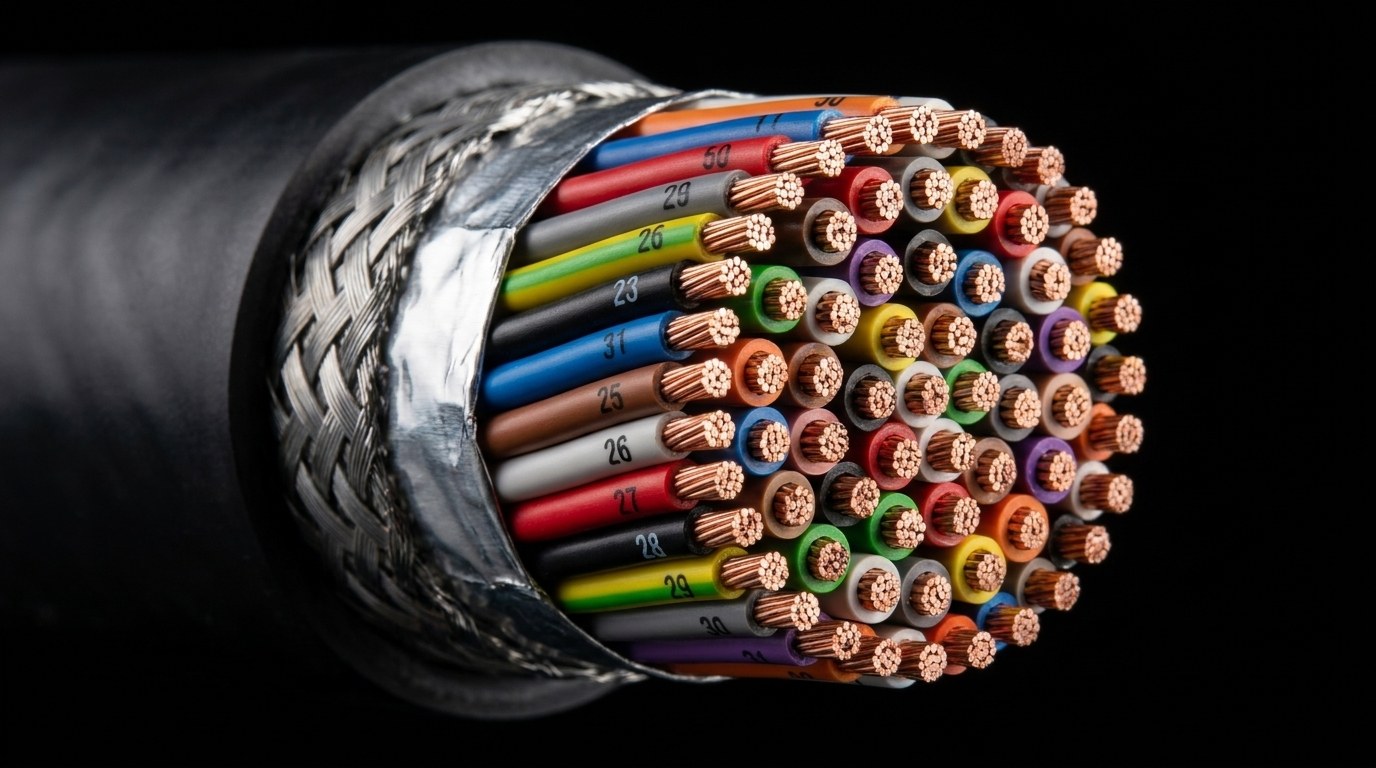
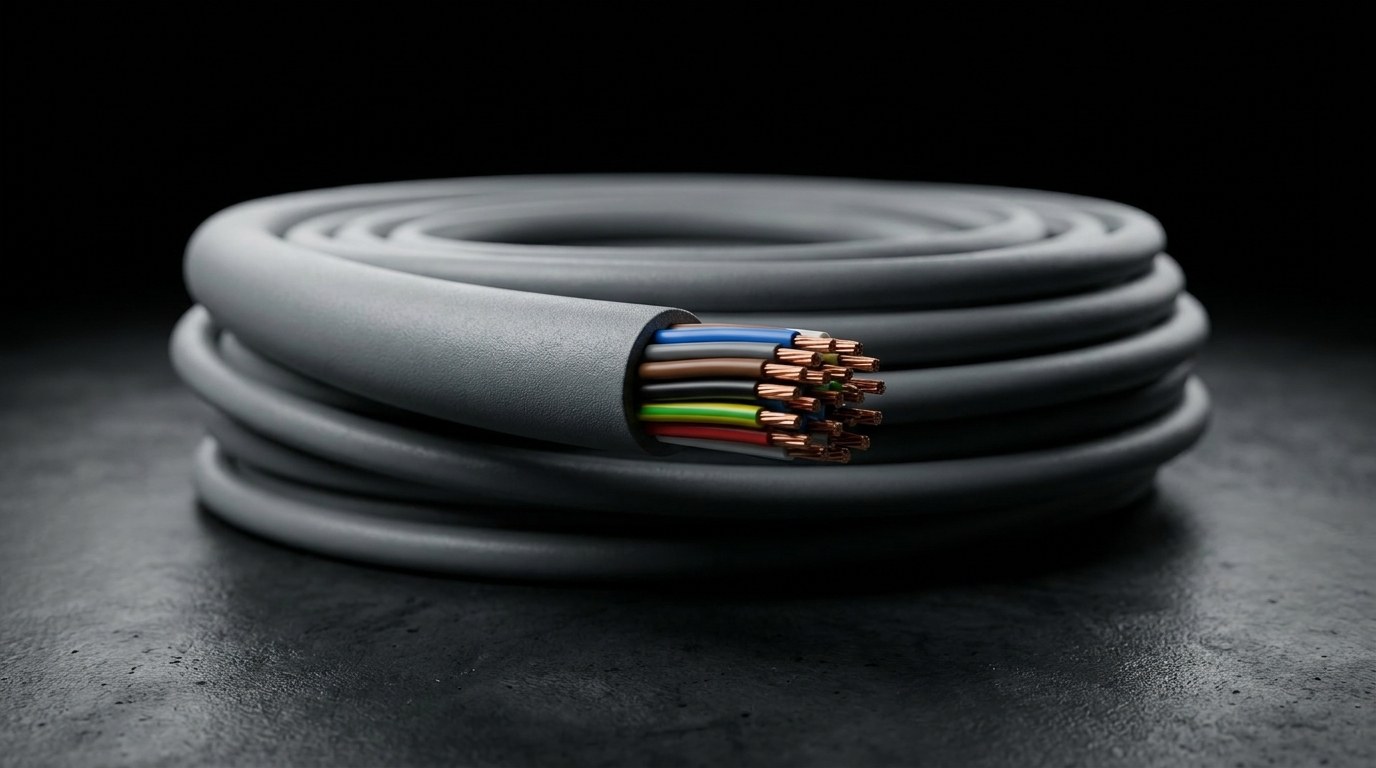
  • Conductor options: bare annealed copper or tin-coated copper
  • Insulation choices: PVC, PE, or XLPE
  • Identification by color coding or sequential numbering

Evenson Power

Construction

At the core of every Evenson Power control cable is a stranded copper conductor selected for flexibility and low resistance. Each conductor is individually insulated, then the insulated cores are laid up in concentric layers around a central element to produce a compact, round, and dimensionally stable cable. A binder tape may be applied over the laid-up cores to hold the assembly and ease sheath extrusion.

Over the core assembly, an inner bedding can be applied where additional mechanical support is needed, followed by an optional shield. Shielding is available as a tinned copper braid for broadband electromagnetic protection, a copper tape for electrostatic screening, or steel tape armoring where mechanical protection against crushing and impact is the priority. The cable is finished with a tough PVC outer sheath that resists abrasion, oils, and the general rigors of an industrial environment.

This layered construction gives the cable a balance of flexibility for routing through trays, conduits, and machine frames, and durability for a long service life in fixed and occasionally moved installations.
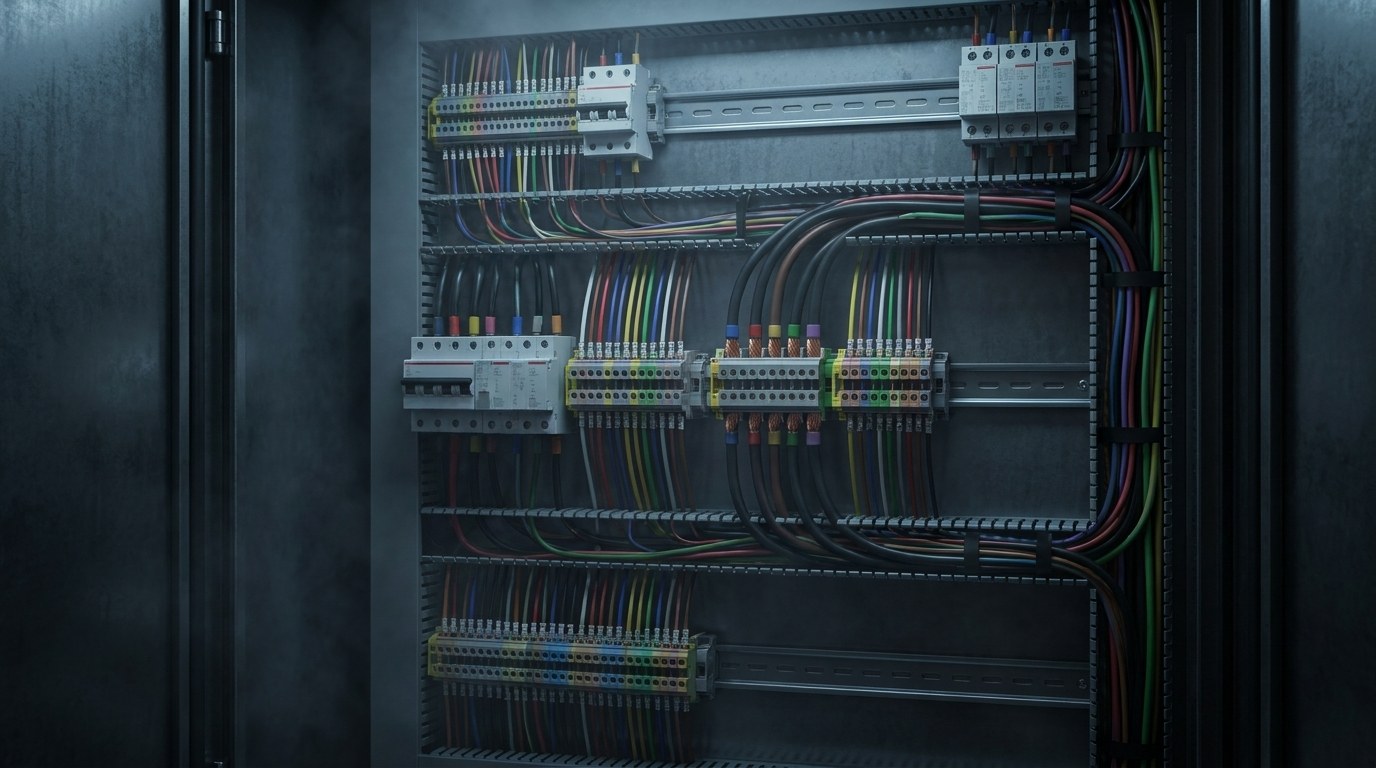
  • Stranded copper conductor for flexibility and low resistance
  • Individually insulated, color/number-coded cores laid up concentrically
  • Optional copper braid, copper tape screen, or steel tape armor
  • Abrasion- and oil-resistant PVC outer sheath

Range & Ratings

Evenson Power control cables are offered with conductor cross-sections from 0.5mm² through 10mm², including the popular 0.75, 1.0, 1.5, 2.5, 4, 6, and 10mm² sizes. Core counts span 2, 3, 4, 5, 7, 14, 19, 24, 27, 30, 37, 44, 48, 52, and 61 cores, covering everything from simple two-wire control loops to dense panel harnesses.

The rated voltage is AC U0/U 450/750V, suitable for control circuits and auxiliary power. Temperature rating depends on the insulation chosen: PVC and PE insulated constructions are rated to 70°C conductor temperature, while XLPE insulated versions are rated to 90°C, providing extra margin in warm enclosures and near heat-producing equipment.

  • Conductor sizes: 0.5–10mm²
  • Core counts: 2 up to 61 cores
  • Rated voltage: 450/750V AC
  • Temperature: 70°C (PVC/PE) or 90°C (XLPE)

Evenson Power

Key Features & Benefits

The combination of flexible copper conductors and a tough PVC sheath delivers a cable that is easy to install yet durable in service. High core counts let engineers consolidate many control functions into a single cable run, reducing conduit fill, labor, and the chance of wiring errors. Optional shielding protects low-level signals from electromagnetic interference generated by drives, contactors, and switching equipment, improving the reliability of analog and digital control signals.

Because Evenson Power offers multiple insulation and screening options on a common platform, plants can rationalize inventory while still meeting the specific electrical and environmental needs of each circuit. The result is lower total installed cost and more predictable long-term performance.

  • Reduces conduit fill and labor with high-density multi-core runs
  • Shielding options improve EMC performance for sensitive signals
  • XLPE option adds thermal headroom in hot enclosures
  • Clear core identification speeds installation and troubleshooting

Applications

Evenson Power control cable is used wherever control and signal currents must be routed reliably. Typical applications include machine tools and production lines, motor control circuits, robotics and automation cells, HVAC and building management systems, conveyor and material-handling equipment, and the interconnection of control panels, PLCs, sensors, and actuators.

The cable suits fixed installations in trays, ducts, and conduits, as well as runs through vertical shafts and buried routes when an armored version is specified. Lightly flexed applications, such as cables routed to moving but non-continuous parts of machinery, are also well supported by the stranded conductor design.

  • Machine tools, production lines, and automation cells
  • Motor control and robotics wiring
  • HVAC, building automation, and conveyor systems
  • Panel-to-device interconnection for PLCs, sensors, and actuators

Standards & Testing

Evenson Power control cables are manufactured and tested to the requirements of GB/9330 for plastic-insulated control cables, with constructions and test regimes aligned to recognized international practice for low-voltage control wiring. Conductors are verified for DC resistance, insulation is checked for thickness, dielectric strength, and insulation resistance, and finished cables undergo high-voltage spark testing and dimensional inspection.

Where shielding is specified, screen coverage and continuity are verified, and armored constructions are checked for mechanical integrity. This disciplined testing approach ensures consistent quality from reel to reel.

  • Manufactured to GB/9330 for plastic-insulated control cables
  • Conductor DC resistance and insulation resistance verified
  • High-voltage and spark testing on finished cable
  • Screen coverage and armor integrity checks where applicable

Installation & Handling

For long service life, observe the minimum bending radius appropriate to the cable diameter, generally no tighter than the values recommended for PVC-sheathed control cables, and avoid sharp edges during pulling. Use proper glands and strain relief at entries, and support the cable at regular intervals in trays and on machine frames to prevent sagging and mechanical fatigue.

During installation in cold conditions, allow the cable to acclimate before bending to avoid cracking the PVC sheath. Terminate conductors using ferrules or correctly sized lugs, and where shielded cable is used, bond the screen at the appropriate point to maintain EMC performance without creating ground loops.

  • Respect minimum bending radius to protect cores and sheath
  • Use glands and strain relief at all entries
  • Support runs at regular intervals to prevent fatigue
  • Bond shields correctly to avoid ground loops

Why Evenson Power

Evenson Power combines a broad, standards-aligned control cable range with consistent manufacturing quality and responsive technical support. Customers benefit from a single platform that scales across core counts, conductor sizes, insulation systems, and shielding options, simplifying specification and procurement. Every cable is built to deliver dependable control performance and a long, low-maintenance service life.

Backed by rigorous testing and clear documentation, Evenson Power control cable helps OEMs, panel builders, and plant engineers keep projects on schedule and systems running reliably.

  • One scalable platform for all control wiring needs
  • Standards-aligned manufacturing and thorough testing
  • Responsive technical and specification support

Technical Specifications

ConductorStranded annealed copper (bare or tin-coated)
Conductor classFlexible stranded
InsulationPVC, PE, or XLPE
SheathPVC, abrasion- and oil-resistant
Rated voltage450/750V AC (U0/U)
Conductor sizes0.5 – 10 mm²
Cores2, 3, 4, 5, 7, 14, 19, 24, 27, 30, 37, 44, 48, 52, 61
Temperature rating70°C (PVC/PE), 90°C (XLPE)
ShieldingOptional tinned copper braid or copper tape screen
ArmoringOptional steel tape armor
IdentificationColor coding or sequential numbering
StandardGB/9330 (plastic-insulated control cables)
InstallationFixed, trays, ducts, conduit, shafts, buried (armored)
FlexibilitySuitable for fixed and lightly flexed service

Control Cable, by Evenson Power.

Engineered, certified and delivered under the Evenson Power name.