
Free engineering calculators for transformers, switchboards and cables — from the Evenson Power technical team.
Specifying electrical power equipment starts with the numbers. These free Evenson Power calculators help engineers, contractors and buyers convert between the units that matter — kVA, amps, kW and fault current — so you can size a transformer, choose a switchboard interrupting rating, or check a cable run in seconds. Every calculator works for both three-phase and single-phase systems and updates live as you type.
We built them because the same questions come up on almost every project: How many amps will this transformer draw? What kVA do I need for this kW load? How much fault current will the secondary deliver, and will my switchboard withstand it? Answering them quickly keeps projects moving — and links directly to the Evenson Power transformers, UL 891 switchboards and cables that turn the calculation into hardware.
Convert transformer kVA to full-load amps (and back).
3-phase: I = kVA×1000 ÷ (√3 × V). Sizing a transformer? See Evenson Power transformers.
Convert real power (kW) to apparent power (kVA) using power factor.
kVA = kW ÷ PF. Lower PF needs a larger transformer for the same load.
Rated current on the primary or secondary of a transformer.
Specify ratings with Evenson Power power & distribution transformers.
Approximate symmetrical fault current at a transformer's secondary.
Size protection accordingly — see Evenson Power UL 891 switchboards (up to 100 kAIC).
Estimate voltage drop along a copper cable run.
Copper ρ=0.0175 Ω·mm²/m. Browse Evenson Power cables & wires.
Suggests a minimum copper conductor size for a load current.
Indicative free-air ampacity; confirm per installation method & standard. See power cable specs.
Once you know the rating, voltage class and fault level, Evenson Power supplies the matching power, distribution or dry-type transformer — engineered and certified to IEEE, IEC, CSA and DOE standards.
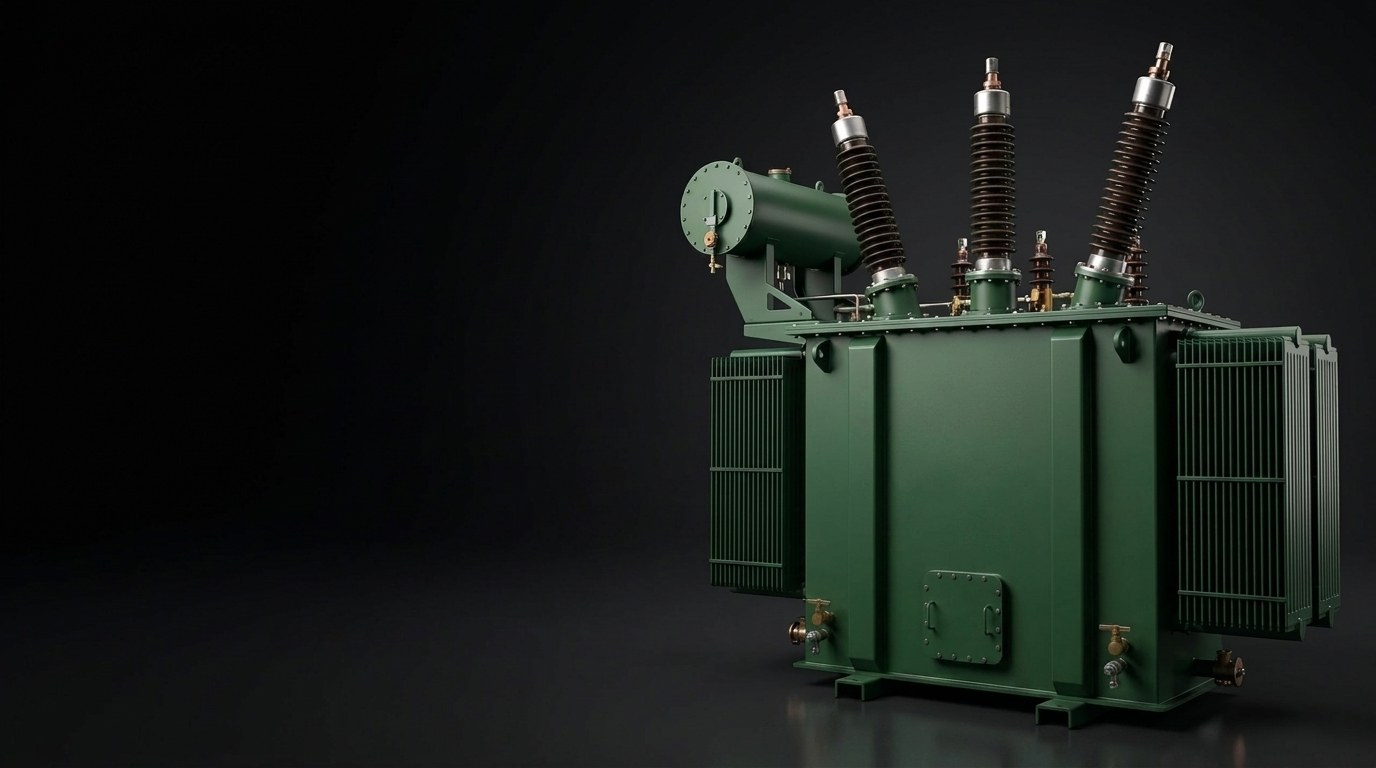
Enter the transformer rating in kVA and the line-to-line voltage to get full-load current. This is the starting point for selecting conductors, breakers and switchboard bus ratings. Switch between three-phase and single-phase with one tap.
Real loads are rated in kW, but transformers are rated in kVA. Divide kW by the power factor to find the apparent power your transformer must supply. If your facility runs a poor power factor, you will need a larger transformer or power-factor correction.
Find the rated current on the primary or secondary of a transformer from its kVA and voltage. Use it to coordinate protection and to verify cable ampacity against the load.
The fault-current tool estimates the symmetrical short-circuit current at a transformer secondary from its impedance — the figure that determines the interrupting rating (kAIC) of your switchboard. The voltage-drop and cable-size tools help you keep conductor losses within limits across long runs.
Under-sizing a transformer leads to overheating, lost life and nuisance trips; over-sizing wastes capital and runs the unit inefficiently at low load. Getting the fault level right is just as important — an under-rated switchboard is a safety risk, while an over-rated one adds unnecessary cost. These calculators give you defensible first-pass numbers, and our engineers are on hand to confirm the final specification for your project.
When you are ready, send your load schedule or one-line diagram and the Evenson Power team will return a complete proposal covering transformers, UL 891 switchboards and cable — backed by EP Group’s global sourcing and authorized brand partnerships.
Most commercial and industrial power is three-phase, so the three-phase formulas (with the √3 factor) apply to transformers, switchboards and feeders in those systems. Single-phase formulas apply to residential services, small loads and control circuits. Each Evenson Power calculator includes a one-tap toggle between three-phase and single-phase so you never mix the two up — a common source of sizing errors. When in doubt, match the calculator mode to the system serving the equipment you are sizing.
A calculation is only useful if it leads to equipment that actually fits together. The full-load current you compute drives conductor and bus sizing; the fault current you estimate drives the switchboard interrupting rating; the voltage drop you check drives cable size on long runs. Evenson Power engineers these stages as one coordinated power chain — transformer, switchboard and cable — so the numbers you generate here translate directly into hardware that is correctly matched, certified and delivered together.
These tools give fast, defensible first-pass figures using standard formulas and typical material constants — for example a copper resistivity of 0.0175 Ω·mm²/m for voltage drop, and standard impedance for fault estimates. Final design should always confirm ampacity against the installation method, derating, ambient temperature and the governing standard, and verify fault levels with the actual source impedance. Evenson Power’s technical team is available to review your assumptions and confirm the final specification before you commit to an order.
These tools are used every day by consulting engineers sizing a service, contractors checking a feeder before they pull cable, and buyers sanity-checking a vendor proposal. Because they cover the whole chain — source, transformer, switchboard and conductor — you can move from a load figure to a coordinated equipment list without leaving the page. Bookmark them, and when the numbers are settled, send them to our team with a request for quotation and we will turn the calculation into a delivered, certified power package.
Every calculation maps to hardware. A kVA figure points to a power or distribution transformer; an interrupting rating points to a UL 891 switchboard; a conductor size points to a power or building cable. Explore the Evenson Power transformers, switchboards and cables to see ratings, standards and specifications, or read the buyer’s guides for help choosing between options like oil-immersed and dry-type transformers, or UL 891 switchboards versus panelboards and switchgear.