
A step-by-step guide to sizing, rating and ordering power and distribution transformers — with the exact information Evenson Power needs to quote yours fast.
Specifying a power transformer correctly is the difference between a reliable, efficient installation and years of avoidable losses. A transformer is a long-life asset — often thirty years or more — so the decisions made at specification stage affect energy cost, reliability and safety for decades. This Evenson Power guide walks engineers and buyers through every key parameter, in the order our team needs them to prepare an accurate quotation.
Evenson Power supplies the full range, from 300 kVA distribution units to 240 MVA power transformers, in oil-immersed, dry-type and amorphous-alloy designs, all certified to IEEE/ANSI, IEC, CSA and DOE standards. Use the steps below alongside our free electrical calculators.
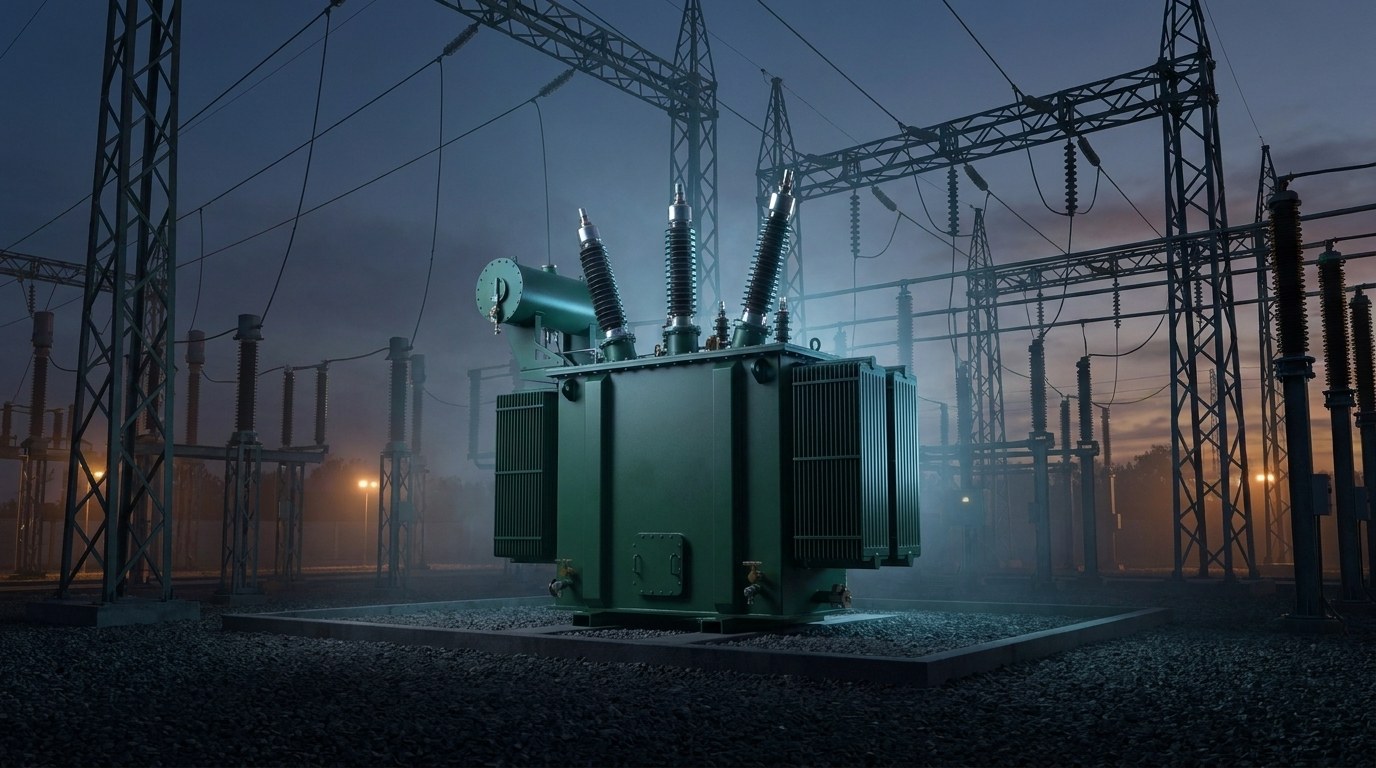
Choose oil-immersed (ONAN/ONAF/OFAF) for high ratings and outdoor duty, or cast-resin / VPI dry-type for indoor and fire-sensitive spaces. Pad-mounted, substation and pole-mounted form factors each suit different sites and ambient conditions.
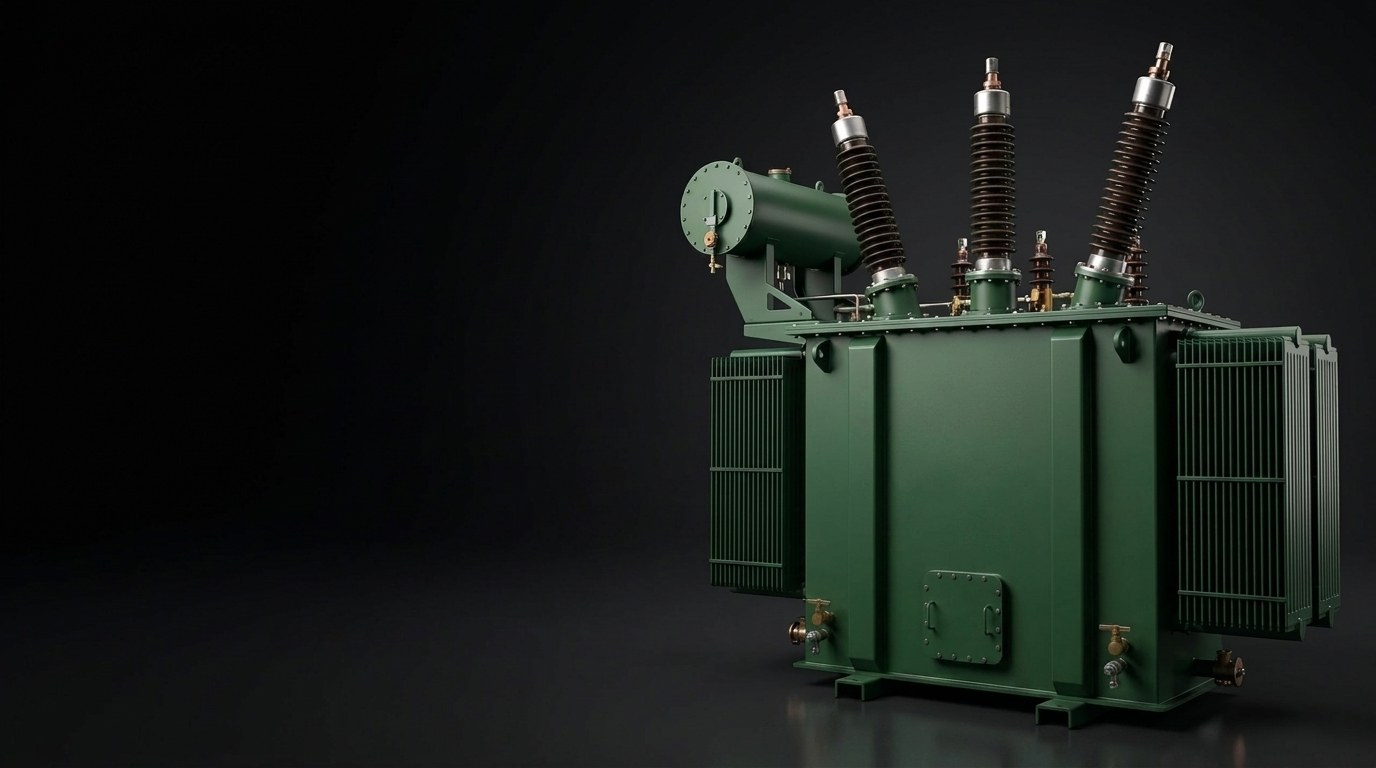
Start from the connected load and demand factor to determine apparent power. Convert kW to kVA using the power factor, and check full-load current. Allow headroom for future growth, but avoid gross over-sizing, which forces the unit to run inefficiently at low load. For motor-heavy or non-linear loads, account for inrush and harmonics when fixing the rating.
Specify the primary and secondary voltages, the winding connection (for example Delta–Wye), and the tap range — on-load (OLTC) for networks with variable voltage, or de-energized (DETC) for stable supplies. The voltage class also sets the basic insulation level (BIL): typically 95 kV at 15 kV class, 125 kV at 25 kV, and 150 kV at 35 kV. Getting the vector group right is essential for parallel operation and protection coordination.
Impedance (%Z, typically around 5.75%) limits short-circuit current and affects voltage regulation and parallel operation. Lower impedance means a stiffer supply but higher fault current — which directly sets the interrupting rating of your UL 891 switchboard. Estimate the secondary fault current with our fault-current calculator before fixing protection ratings.
Confirm the governing standards (IEEE/ANSI C57, IEC 60076, CSA, DOE 2016 efficiency), ambient temperature, altitude, seismic requirements and enclosure (NEMA 1 indoor / NEMA 3R outdoor). Specify accessories such as bushings, tap changers, Buchholz relays, temperature monitoring and surge protection.
To prepare a quotation, Evenson Power needs:
Send your one-line diagram or load schedule and our team returns a tailored proposal. Explore the full Evenson Power transformer range.
A transformer’s purchase price is a fraction of its lifetime cost — energy losses dominate. No-load (core) losses run continuously for decades, while load losses scale with loading. Specifying to DOE 2016 (or better) efficiency and evaluating losses at your expected loading can repay a modest price premium many times over. Amorphous-core designs cut no-load losses further for lightly loaded or continuously energized units. Evenson Power can quote loss-evaluated options so you can compare on total cost of ownership, not just first cost.
Plan for transport, rigging and foundation early — large units ship with impact recorders and defined lifting points. Commissioning includes insulation resistance, turns-ratio, winding-resistance and oil-quality checks, plus functional testing of protection such as Buchholz and temperature devices. Oil-immersed units need periodic oil sampling and dissolved-gas analysis; dry-type units need only cleaning and connection checks. Designing maintenance access in from the start keeps a transformer reliable across its full service life.
Beyond standard ratings, Evenson Power supplies tailored designs — special vector groups, non-standard taps, low-noise or seismic construction, and a full range of accessories from bushings and tap changers to monitoring and surge protection. If you are matching an existing installation or have unusual site constraints, share the details and our engineers will design to fit rather than forcing a compromise.
The most frequent errors we see are mixing single- and three-phase formulas, ignoring power factor when converting kW to kVA, under-rating the secondary fault level, and omitting the vector group or tap range entirely. Each leads to mis-sized equipment, protection that will not coordinate, or units that cannot be paralleled. Using the Evenson Power calculators and the checklist above avoids them, and our engineers review every specification before manufacturing so issues are caught on paper, not on site.
You do not have to finalize every parameter alone. Share a one-line diagram, a load schedule or even a rough set of requirements, and the Evenson Power engineering team will help complete the specification — recommending ratings with sensible headroom, confirming the vector group and tap arrangement, evaluating losses for total cost of ownership, and matching the transformer to the downstream switchboard and protection. Because we engineer and supply the whole power chain, the transformer we quote is coordinated with the switchboard and cable it will serve, certified to the standards your project demands, and delivered on a schedule built through EP Group’s global sourcing. The result is a specification that is right on paper before anything is manufactured.