
EVENSON POWER

Furnace Transformer

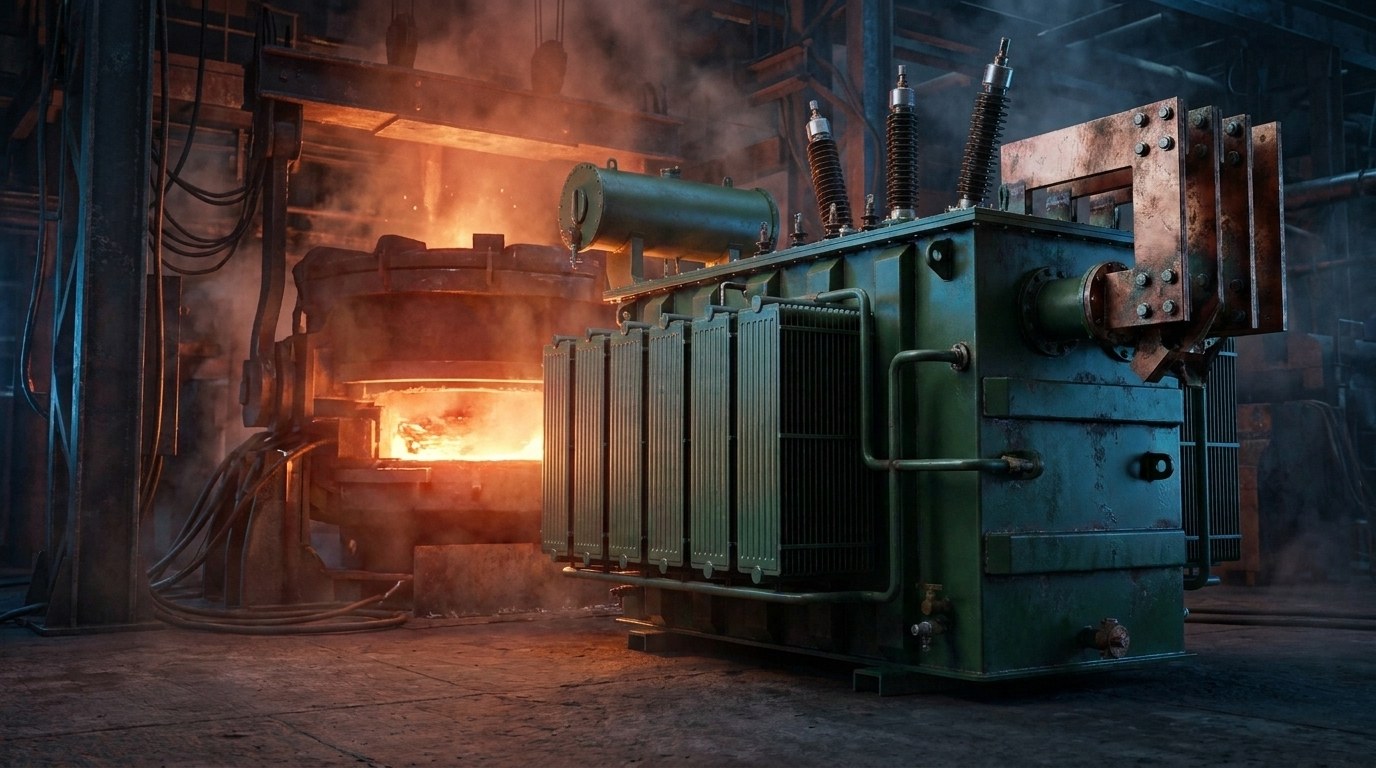
The Evenson Power Furnace Transformer is a heavy-duty, high-current power transformer engineered for electric arc, ladle, induction, and submerged-arc furnaces.

Oil-immersed furnace
Type
20 MVA
Typical Rating (arc furnace)
72.5 kV
Primary Voltage

Introduction

Furnace transformers are among the most demanding apparatus in any power system. They must supply enormous secondary currents at low voltage, tolerate violent and rapidly fluctuating loads, survive frequent short-circuits inherent to arc melting, and regulate output voltage across a wide range while doing so. The Evenson Power Furnace Transformer is purpose-built for exactly this environment.

Used in steelmaking, foundries, glass and ceramic production, and a range of high-temperature process industries, these transformers are the energy backbone of the modern electric furnace, converting incoming medium-voltage supply into the controllable, high-current power that drives the melting process.

  • Low-voltage, ultra-high-current power transformer
  • For arc, ladle, induction, resistance and submerged-arc furnaces
  • On-load or no-load voltage regulation across a wide range
  • Designed to withstand frequent furnace short-circuits

What Is a Furnace Transformer?

A furnace transformer steps incoming primary voltage down to a low secondary voltage capable of delivering currents ranging from several thousand to tens of thousands of amperes. Unlike a standard power transformer, its design is dominated by the management of very high secondary current, the associated heat, and the strong electromagnetic forces that current produces.

The Evenson Power range covers arc-furnace duty typically in the 20 MVA to 200 MVA range, with primary voltage classes that do not exceed 72.5 kV. Secondary voltage is selectable across many tap steps so operators can match the furnace through the full melt cycle, from initial bore-in to flat-bath refining.
Evenson Power

Construction & Design

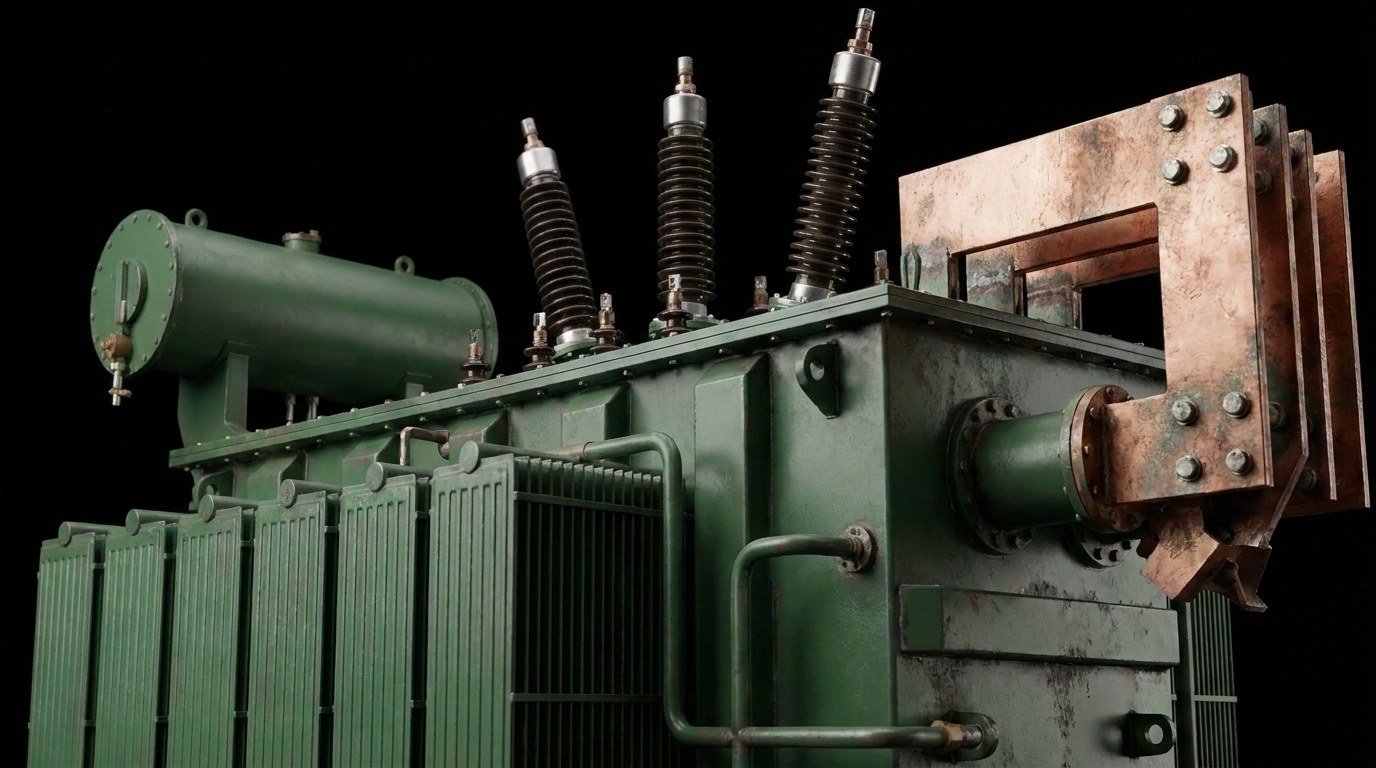
The core, windings, clamping structure, tank, and cover are built from heavy steel and high-strength materials selected to resist continuous mechanical and thermal stress. Tap windings, usually placed on the high-voltage side, provide the many regulation steps the process requires, and coils are arranged so that primary tap positions affect reactance as uniformly as possible.

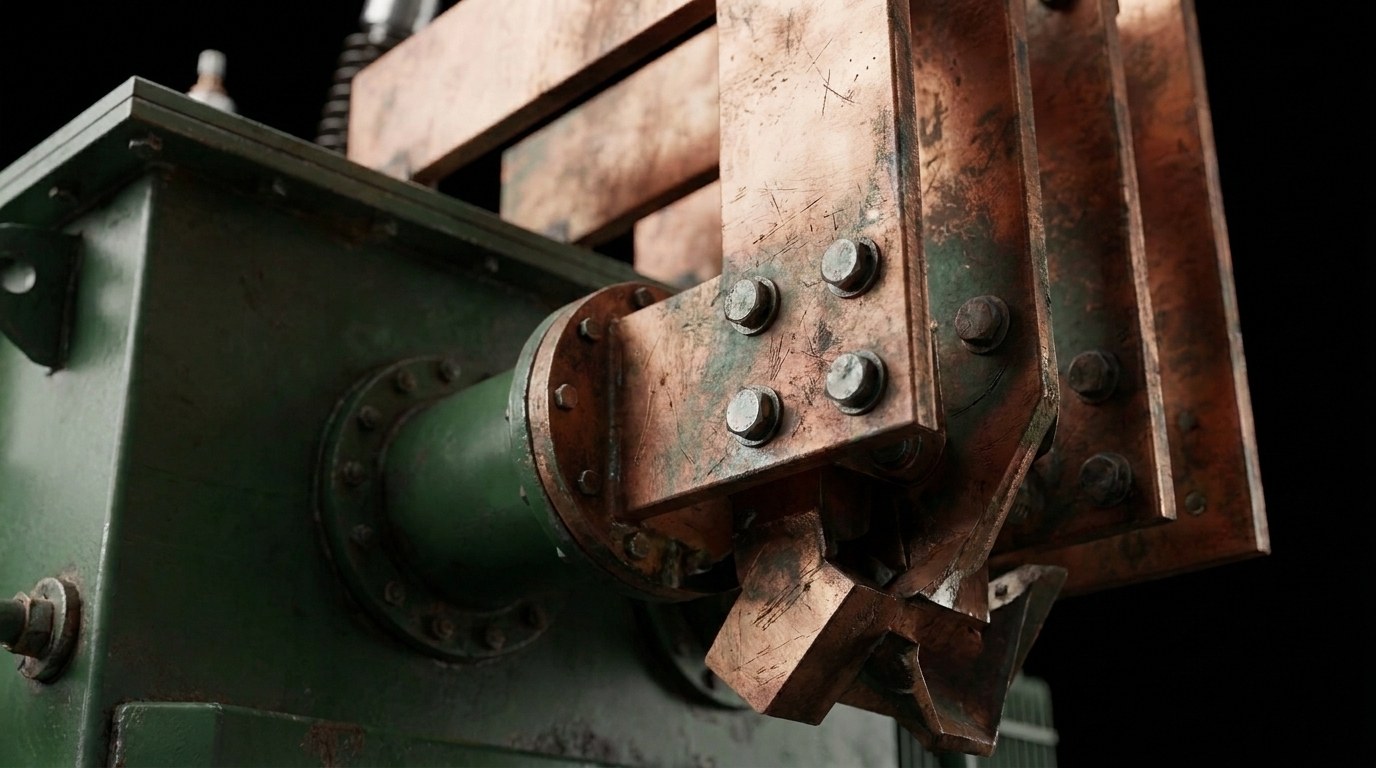
Secondary low-voltage delivery is achieved through subdivided, staggered busbars routed through the cover. This arrangement controls leakage-flux concentration, prevents localized overheating of structural steel, and balances the current among parallel conductors. In three-phase units a delta secondary, often an external delta with staggered busbars, is used to combine windings while managing the magnetic field.

Reactance is a defining design parameter. For large arc furnaces the transformer’s inherent reactance, generally kept to roughly 10 to 15 percent, is sufficient to stabilize the arc; smaller furnaces may require a separately specified series reactor. Reactance is engineered to vary inversely with the square of the secondary voltage to maintain stable operation across the tap range.
  • Heavy steel core, clamping, tank and cover for severe duty
  • HV-side tap windings with many regulation steps
  • Subdivided, staggered LV busbars through the cover
  • Delta (often external delta) secondary for three-phase units
  • Reactance typically 10–15% for arc-stabilizing performance

Ratings & Range

Evenson Power Furnace Transformers are configured to the specific furnace they serve. Arc-furnace units commonly fall in the 20–200 MVA band, while ladle, induction, and resistance applications are scaled to their respective process loads. Primary voltage classes are held at or below 72.5 kV, and secondary voltage is offered across a wide regulated range with very high rated current.

The chosen secondary voltage range strongly influences transformer weight, cost, and reactance behavior, so each unit is optimized for the operating window of its furnace rather than supplied as a generic rating.

  • Arc-furnace rating: typically 20–200 MVA
  • Primary voltage: up to 72.5 kV
  • Secondary: low voltage, currents from thousands to tens of thousands of amperes
  • Wide multi-step voltage regulation range
  • Frequency: 50 Hz / 60 Hz

Evenson Power

Key Features & Benefits

High overload capability and short-circuit strength let the transformer ride through the repeated faults that are normal in arc melting without damage. On-load tap changing enables operators to adjust power input dynamically, maximizing furnace productivity and energy efficiency.

Efficient design, with high-quality units typically achieving 95 percent or better, reduces energy cost per ton of product. Robust insulation rated for elevated operating temperatures supports continuous, high-duty operation.

  • Exceptional short-circuit and overload withstand
  • On-load or no-load tap changing for dynamic power control
  • High operating efficiency (typically 95%+)
  • Insulation engineered for high continuous temperatures
  • Low-reactance design tuned to furnace stability

Applications

The Evenson Power Furnace Transformer serves AC and DC electric arc furnaces for steel and alloy production, ladle (refining) furnaces, induction furnaces, resistance furnaces, and submerged-arc furnaces used in ferroalloy and similar processes.

Beyond primary metals, the same technology supports glass and ceramic melting and other high-temperature industrial heating where large, controllable electrical power must be delivered at low voltage.

  • Electric arc furnaces (AC/DC) for steelmaking
  • Ladle and refining furnaces
  • Induction and resistance furnaces
  • Submerged-arc / ferroalloy furnaces
  • Glass and ceramic melting

Standards & Testing

Furnace transformers are designed to recognized international standards for power transformers and furnace-duty apparatus, with particular attention to short-circuit withstand, temperature rise under fluctuating load, and dielectric integrity. Routine factory tests cover ratio, winding resistance, losses, impedance/reactance verification across taps, and dielectric tests.

Special testing such as temperature-rise and impulse testing is available to validate performance to the product class. Supported compliance and certification marks include IEC, UL, CE, KEMA, and TUV.

  • Routine tests: ratio, resistance, losses, reactance across taps, dielectric
  • Special tests: temperature rise, impulse withstand
  • Compliance: IEC, UL, CE, KEMA, TUV

Installation & Maintenance

Large furnace transformers are installed close to the furnace to minimize secondary busbar length and the associated losses and voltage drop. Cooling is selected to suit the site: water cooling is preferred for the largest furnaces for its compactness and economy, with natural cooling offered where water quality or availability is a concern. Sealed designs with properly engineered stuffing boxes keep dust and contaminants out.

Maintenance focuses on regular insulating-fluid quality checks to guard against moisture and impurities, monitoring of core insulation, verification of internal and busbar connections, and confirming that overload protection and neutral-point grounding (for low-voltage systems) function correctly.

  • Install close to furnace to minimize secondary busbar losses
  • Water-cooled or natural-cooled options to suit site
  • Regular insulating-fluid quality monitoring
  • Inspect core insulation and high-current connections
  • Verify overload protection and neutral grounding

Why Evenson Power

Evenson Power Furnace Transformers are engineered specifically around the customer’s furnace, not adapted from generic designs. That focus delivers the precise reactance, regulation range, and short-circuit strength a productive, energy-efficient melt shop demands.

With rigorous quality control, high-temperature-rated materials, and responsive engineering support, Evenson Power supplies furnace transformers built to perform reliably under the most punishing process conditions.

  • Application-engineered for each furnace duty
  • High short-circuit strength and thermal robustness
  • Optimized reactance and wide regulation range
  • Backed by specialist engineering support

Technical Specifications

TypeOil-immersed furnace / arc-furnace power transformer
Typical Rating (arc furnace)20 MVA – 200 MVA
Primary VoltageUp to 72.5 kV
Secondary VoltageLow voltage, wide multi-step range
Secondary CurrentThousands to tens of thousands of amperes
ReactanceTypically 10–15%
Voltage RegulationOn-load or no-load tap changer, many steps
PhasesThree-phase (delta secondary) / single-phase
Frequency50 Hz / 60 Hz
CoolingWater-cooled or natural (oil) cooling
Core MaterialGrain-oriented silicon steel (CRGO)
Winding / BusbarCopper, subdivided & staggered LV busbars
Typical Efficiency95%+
Tank & ClampingHeavy steel, sealed with stuffing boxes
StandardsIEC / UL / CE / KEMA / TUV
ApplicationsArc, ladle, induction, resistance, submerged-arc furnaces

Furnace Transformer, by Evenson Power.

Engineered, certified and delivered under the Evenson Power name.